
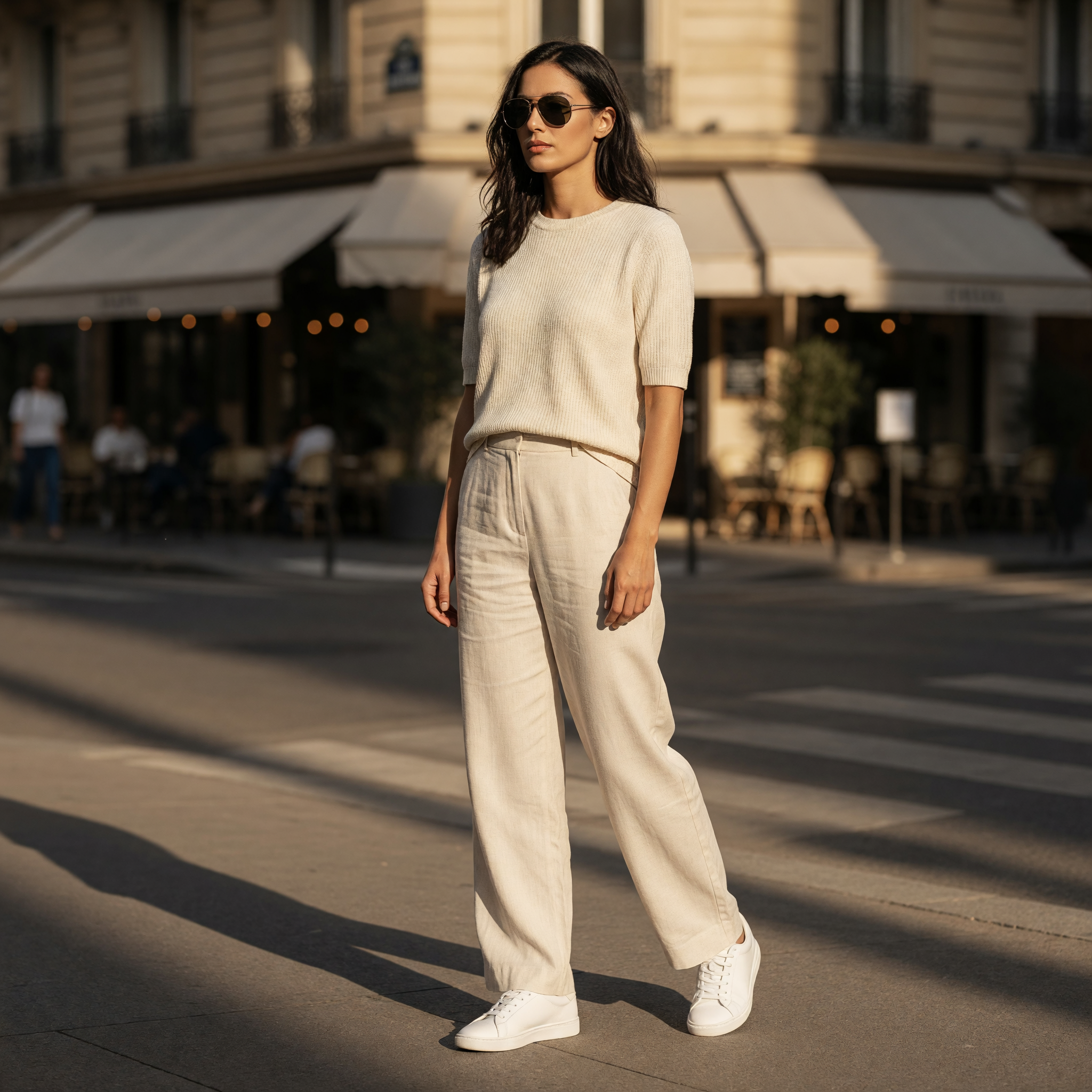
Some styles survive decades because they genuinely earn it. The aviator silhouette — teardrop lenses, thin metal bridge, cable-tip temples — has been doing exactly that since 1936, and heading into 2026, it shows absolutely no signs of slowing down. If anything, the frame has never felt more relevant.
Why Aviators Still Dominate in 2026
Trends come and go in cycles — oversized shields, tiny micro-frames, wraparounds — but the aviator keeps resurfacing not out of nostalgia, but because it genuinely flatters a wide range of face shapes and works across virtually every context. The slightly downward-tapered lens adds length and structure to rounder faces, while the open, airy frame softens stronger jawlines without overpowering them. In a market flooded with novelty, the aviator's staying power is its geometry: it's just well-designed.
What's changed for 2026 is the material conversation and the lens technology behind these classics. Brands are pushing polarized options harder than ever, gradient lenses are having a genuine moment, and the color palette has expanded well beyond classic gold and silver into midnight navy, gunmetal, and rich tortoiseshell.
The Original: Ray-Ban Aviator RB3025
No honest conversation about aviators starts anywhere other than here. The Ray-Ban Aviator RB3025 is the blueprint — the frame that defined the category and still sets the benchmark everything else is measured against. Gold frame, grey gradient lenses, adjustable nose pads: it's an object that looks exactly right because it was engineered to be exactly right. Whether you're wearing a linen shirt on a Lisbon terrace or a worn-in leather jacket on a city commute, this frame doesn't ask you to dress around it. It moves with you.
The RB3025 is also the reference point for understanding what makes or breaks an aviator. The double bridge brow bar, the wire-thin temples, the slight curve of the lenses — every detail that's been copied a thousand times was figured out here first.
Prada's Take: Luxury Meets Precision
Prada brings its characteristic restraint and material obsession to the aviator format, and the results are some of the best aviator sunglasses available at any price point in 2026. The house understands that a great aviator doesn't need to announce itself — it simply has to be impeccably made.
The Prada PR20YS offers a refined pilot shape with polarized lenses, making it an ideal everyday companion for anyone who wants optical clarity without sacrificing form. The Prada PRA58S pushes things slightly more contemporary — polarized lenses again, with a frame architecture that feels modern while remaining firmly rooted in the pilot tradition. And for those drawn to Prada's sportier Linea Rossa line, the Prada Linea Rossa PS55YS delivers technical performance in a pilot silhouette that works just as comfortably on weekend trail walks as it does on city streets.
Prada aviators also benefit from the brand's exceptional lens quality — colors are true, contrast is enhanced, and the optical distortion that plagues cheaper alternatives simply isn't present.
Burberry's Aviators: British Refinement, Updated
Burberry approaches the aviator category with the same discipline that defines its broader design language — understated, heritage-rooted, never fussy. The Burberry BE3125 is the men's standout: polarized lenses in a clean pilot frame that reads as confidently modern without chasing trend cycles. The subtle Burberry detailing — a signature temple motif, precise hardware — rewards closer inspection without demanding it from a distance.
For women, the Burberry BE3113 brings a slightly elevated brow bar and refined proportions that translate the aviator archetype beautifully into a feminine context. It's the kind of frame that works with a trench coat in October and a silk camisole in July — genuinely versatile in the truest sense.
Don't Sleep on Serengeti
Serengeti doesn't get the fashion press that Prada and Burberry command, but among people who spend serious time outdoors, the brand is quietly revered. Serengeti's photochromic lens technology — which adjusts tint automatically based on light conditions — was developed for pilots, which makes it a natural fit for the aviator form. Their pilot-silhouette frames combine that lens intelligence with Zeiss optics, delivering visual performance that rivals anything in the category. If your aviator needs to work as hard as it looks, Serengeti deserves a serious look.
How to Choose the Right Aviator for Your Face
The aviator's reputation as a universal flatterer is largely earned, but proportions still matter. A few practical guidelines:
- Round faces benefit from standard or slightly larger aviator sizing — the angular brow bar adds the definition the face shape naturally lacks.
- Oval faces can wear almost any aviator variation, from compact pilots to oversized interpretations.
- Square or angular faces are flattered by aviators with slightly rounder, softer lens curves that counterbalance strong bone structure.
- Heart-shaped faces tend to suit medium-width frames best — avoid very wide aviators that emphasize a broader forehead.
Beyond shape, lens color makes a significant practical difference. Gradient lenses (darker at the top, lighter below) are ideal for driving. Green and grey lenses offer the most natural color perception in bright conditions. Brown and amber tints enhance contrast in variable or lower-light environments.
The Verdict on Aviators in 2026
The best aviator sunglasses aren't the ones that feel most current — they're the ones that will still feel right five years from now. That's the quiet argument the aviator has been winning for nearly ninety years. Whether you invest in the benchmark Ray-Ban, a precision-crafted Prada, a refined Burberry, or a technically exceptional Serengeti, you're buying something that earns its place season after season without apology.
Browse the full collection of pilot and aviator frames at allureaid.com/collections and find the pair that fits the way you live.